

Play-based learning and ECE: Exploring the lifelong benefits for children
Play matters more than you might think, especially for young children. It is a powerful learning tool for helping children develop core life skills and explore new topics.
The Canadian educational system includes play-based learning in various early learning environments, including preschool, daycare, and Montessori programs. Keep reading to learn why play-based learning is meaningful, how to implement it in your classroom, and how to get your Early Childhood Educator (ECE) diploma in Canada.
What is play-based learning?
Play-based learning is a common preschool teaching method in which children learn through active, imaginative play. It’s a proven way to help them develop cognitive, social, emotional, and physical abilities.
This learning works best when children are given the space to be creative. The role of a facilitator is to guide their exploratory play without taking control. In an early learning classroom, play-based learning can take many forms, including:
- Sensory bins
- Dramatic play
- Artistic endeavours
- Other self-directed exploration
When planning play-based activities for early learners, it should be:
- Self-chosen or directed – Children are given freedom to explore on their own path.
- Enjoyable – Children should have fun, without having specific objectives or goals.
- Unstructured – Children can pursue their interests and feel free to explore where they lead.
- Process-oriented: Avoid telling children what to do or how to do it; instead, provide prompts to help them get started (if needed).
- Imaginative – The activity should allow children to be creative and use their imaginations
Now, let’s explore how play-based learning can support childhood development.
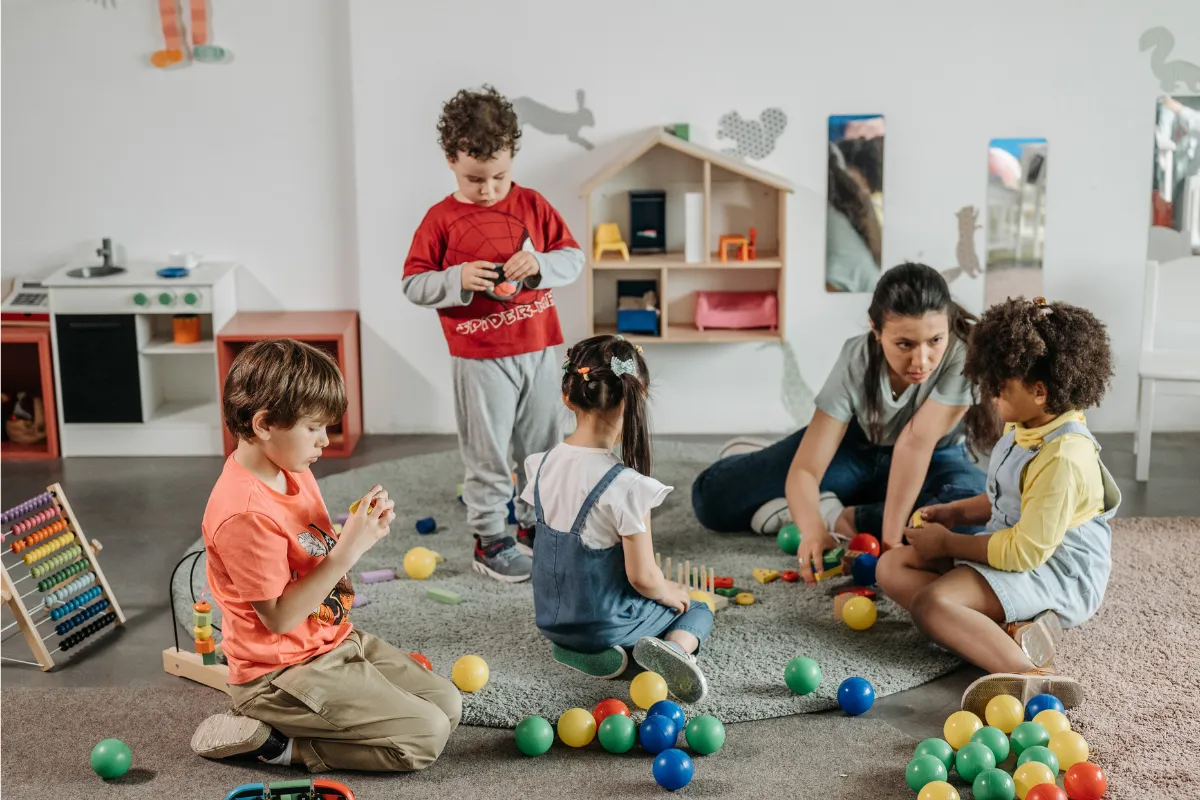
How play supports development
Play can support children in the growth of their cognitive, social, and emotional selves:
Cognitive development
Play helps children learn how to think. It helps them develop critical thinking, healthy problem-solving, and creativity. Activities to support their critical thinking and cognitive skills include:
- Building activities (such as building blocks or marshmallow/toothpick building)
- Dramatic play (children act out a scenario where they need to resolve a conflict or find a solution to something).
- Sensory bins (asking the children to describe what they feel)
Play engages multiple senses, which can more effectively build neural pathways in the brain. For example, telling a child “Doctors help you get better when you’re sick,” may not be as memorable as having them act out what happens when they visit the doctor.
Social development
From a young age, children begin developing their social and communication skills. That’s why it’s important to emphasize positive social development and behaviour before the “bad habits” take hold.
Play-based learning helps children develop and practice positive social-emotional skills, such as empathy and emotional regulation. For example, children playing cooperative games teach children the importance of rules, social importance and benefits of working as a team. Dramatic play activities can help children step into someone else’s shoes to practice empathy.
Emotional development
Play-based activities provide a safe space for children to explore their emotions and learn healthy ways to express themselves. They get to practice different emotions and know which ones are appropriate in various situations.
It can also help them understand the dynamics of different relationships in their lives. For example, many children enjoy role-playing games like “house” to learn about the roles of different family members and how others (such as the mail carrier, teacher, or neighbour) interact with each family member.
Educators can also use play-based activities to help children navigate big feelings in a safe space. For example, if two students are fighting over a toy and need help finding a peaceful resolution, ask them to act out a new way to resolve the conflict. If required, you can provide inspiration or hints, such as “What would happen if you said…”
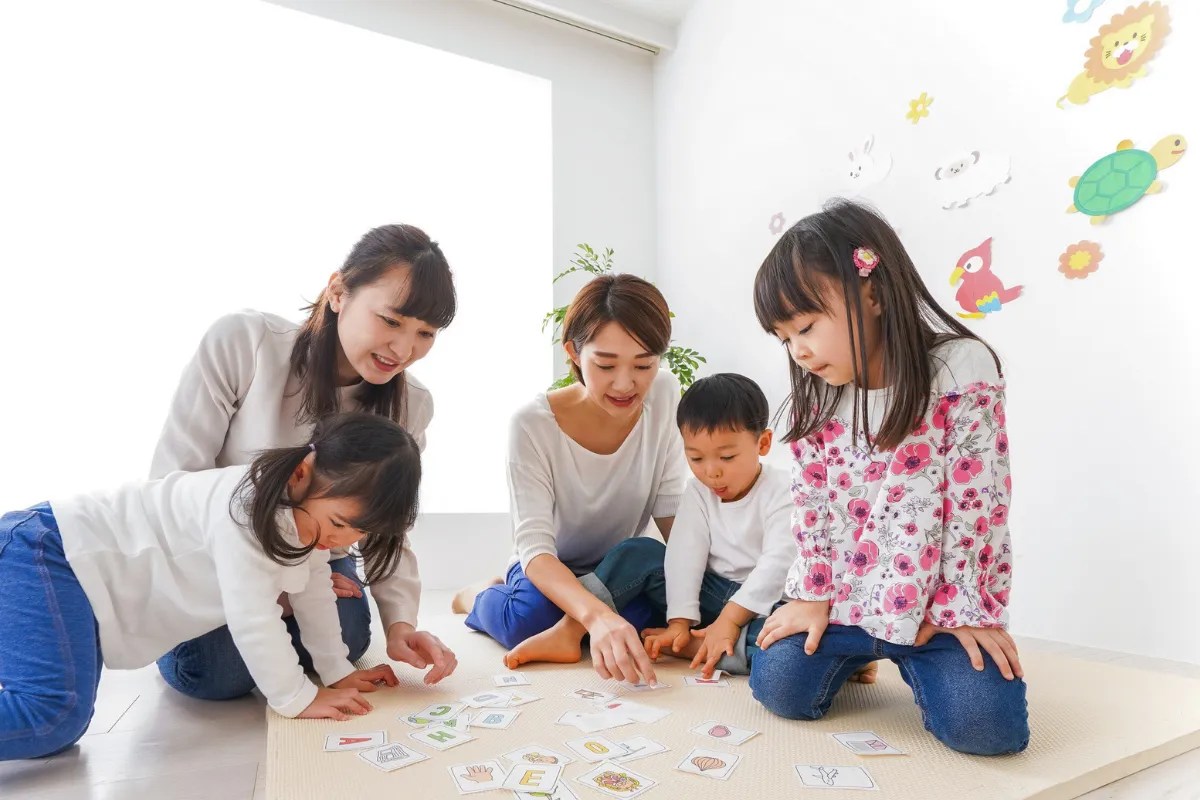
The role of educators in promoting meaningful play
As an ECE or Montessori educator, you play an important role in promoting meaningful, educational play in the classroom. Observe your classroom and provide activities that give children space to explore their interests and develop core life skills in a fun, age-appropriate way.
Create spaces in your classroom for this learning to occur. Have a dress-up or costume box, play props, sensory bins, and hands-on activities, or set up a small platform as their stage.
The impact of play-based learning on school readiness
The Canadian Council of Ministers of Education Canada supports play-based learning in ECE childcare programs in BC:
“Educators should intentionally plan and create challenging, dynamic, play-based learning opportunities. Intentional teaching is the opposite of teaching by rote or continuing with traditions simply because things have always been done that way. Intentional teaching involves educators being deliberate and purposeful in creating play-based learning environments — because when children are playing, children are learning.”
The impact of play-based learning is backed by many studies. Including one American Academy of Pediatrics (AAP) Clinical report. It found that children who enter school with a good foundation in social-emotional, attentional, and cognitive skills have a “stronger foundation for attentional disposition based on the skills and attitudes that are critical for academic success and the long-term enjoyment of learning and love of school.”
How you, as an early learning educator, support play-based learning is part of what you’ll learn at Capital College in your ECE or Montessori curriculum.
Our approach to play-based Early Childhood Education
Capital College believes in providing a well-rounded education, equipping you with the practical, hands-on experience you need to support the care and educational development of the children in your care.
Our instructors will help you understand the benefits of play-based learning and how to apply it in the classroom. You’ll graduate with a solid understanding of the science and application of play in the classroom and how it influences a child’s future success.
We believe that play-based learning should be essential in every early learning environment. It provides students with age-appropriate, fun ways to learn, setting them up for future developmental and academic success.
Do you want to become an ECE or Montessori educator? We’re accepting students for our accredited ECE and Montessori programs now through a rolling admissions process, so you can apply anytime.
Submit your application to start your career journey in early childhood education at Capital College today.